
An outdoor kitchen transforms your backyard from a simple lawn into a true entertainment destination. What begins as a vision of grilling steaks under the stars evolves into a complex project involving appliances, utilities, structures, and careful planning. Understanding the process from initial concept through final completion helps homeowners make informed decisions and avoid costly mistakes.
Defining Your Vision & Budget
The outdoor kitchen planning process starts with honest conversations about how you’ll actually use the space. Some families want a simple grilling station with counter space and storage, while others envision full cooking capabilities rivaling their indoor kitchen. Consider how often you’ll cook outside, how many people you typically entertain, and what types of meals you prepare. Your budget ultimately shapes what’s possible, with basic setups starting around $10,000 – $15,000 and elaborate kitchens easily exceeding $25,000 or more. Establishing clear priorities early prevents scope creep and ensures your money goes toward features you’ll genuinely use rather than impressive elements that sit idle.
Essential Components & Layout
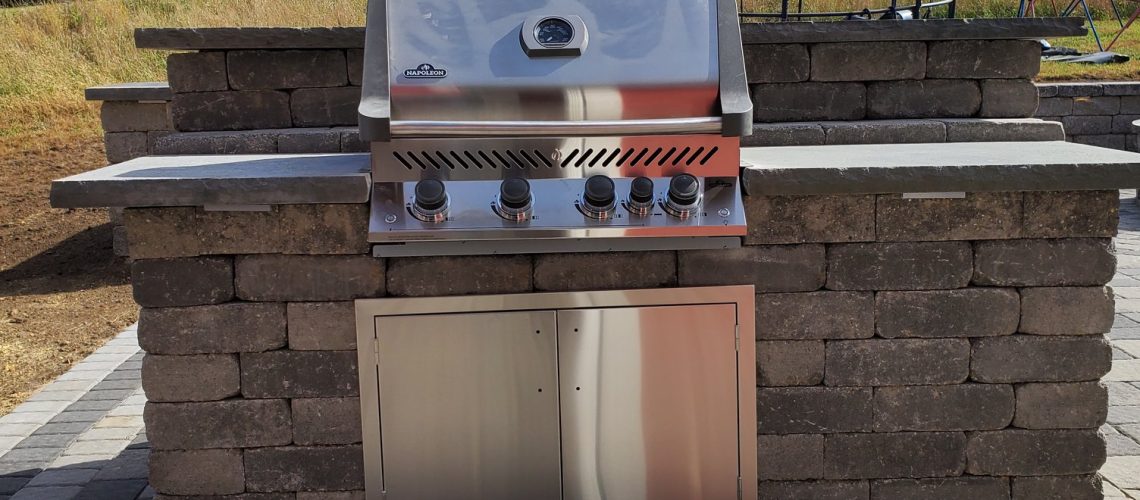
Every functional outdoor kitchen includes certain core elements regardless of size or budget. The grill serves as the centerpiece. Counter space for food preparation and serving proves essential, with most designers recommending at least three feet on either side of the grill. Storage for utensils, propane tanks, and supplies keeps the space organized and functional. A sink with running water eliminates constant trips indoors, though it requires plumbing infrastructure. Refrigeration ranges from simple coolers to full-size outdoor-rated refrigerators. The layout should follow basic kitchen work triangle principles, keeping the relationship between prep, cooking, and serving areas logical and efficient.
Material Selection for Durability
Outdoor kitchens face weather extremes that indoor kitchens never encounter, making material selection critical for longevity. Countertops must withstand temperature swings, moisture, and UV exposure. Granite remains popular for its durability and heat resistance, while concrete offers custom color and finish options. Stainless steel cabinets resist rust and weather better than alternatives, though they come at premium prices. The base structure might be constructed from concrete block, steel framing, or prefabricated modules depending on design and budget. All materials should be rated for outdoor use, as indoor-grade products will deteriorate quickly when exposed to the elements. In regions with harsh winters, choosing materials that handle freeze-thaw cycles becomes particularly important.
Utility Planning & Infrastructure
Running electricity, gas, and water to your outdoor kitchen represents a significant portion of project costs but enables full functionality. Electrical work requires dedicated circuits for appliances, proper outdoor-rated outlets with GFIP protection, and often upgraded service panels. Natural gas lines provide convenient fuel for grills and side burners, requiring professional installation and permitting. Water supply involves running lines from your home, installing shut-off valves for winter drainage, and ensuring proper drainage for the sink. Many homeowners overlook lighting until late in the planning process, but integrated task lighting, ambient lighting, and accent lighting transform the kitchen from a daytime-only space into an evening entertainment area. All utility work requires permits and professional installation to ensure safety and code compliance.
Weather Protection & Seasonal Considerations
An outdoor kitchen’s usability depends largely on weather protection. Basic projects might include only a simple umbrella, while comprehensive designs incorporate permanent roof structures. Pergolas provide partial shade and architectural interest without completely enclosing the space. Full pavilions or covered patios extend the cooking season and protect expensive appliances from weather. In areas with significant winter weather, winterization becomes crucial. This includes draining water lines, covering or removing sensitive appliances, and protecting surfaces from ice and snow damage. Some homeowners install removable panels or screens to block wind while maintaining openness during shoulder seasons. The level of weather protection you choose directly affects how many months per year you’ll comfortably use the space.
The Construction Process
Once planning concludes and permits are obtained, construction typically follows a logical sequence. Site preparation and base work come first, establishing proper drainage and level surfaces. Utility rough-ins happen before any structures are built, with lines stubbed out to proper locations. The main structure and hardscaping go in next, creating the footprint and installing countertops and work surfaces. Appliances and fixtures are installed after structures are complete, ensuring proper fit and connection. Final details like lighting, cabinet doors, and finishing touches come last. A complete outdoor kitchen project typically takes anywhere from 1-4 weeks depending on complexity, weather, and material availability.
Living With Your Investment
A well-designed outdoor kitchen becomes a natural gathering spot that enhances your property value while providing years of enjoyment. Regular maintenance keeps everything functioning properly and looking great. This includes cleaning cooking surfaces, checking gas connections, maintaining wood or composite elements, and performing seasonal winterization. Most homeowners find their outdoor kitchen usage exceeds initial expectations once the space is complete, justifying the investment many times over through enhanced lifestyle and entertainment capabilities.
If you’re ready to elevate your backyard to luxury, contact the experts at Peters’ Patio & Landscape today.