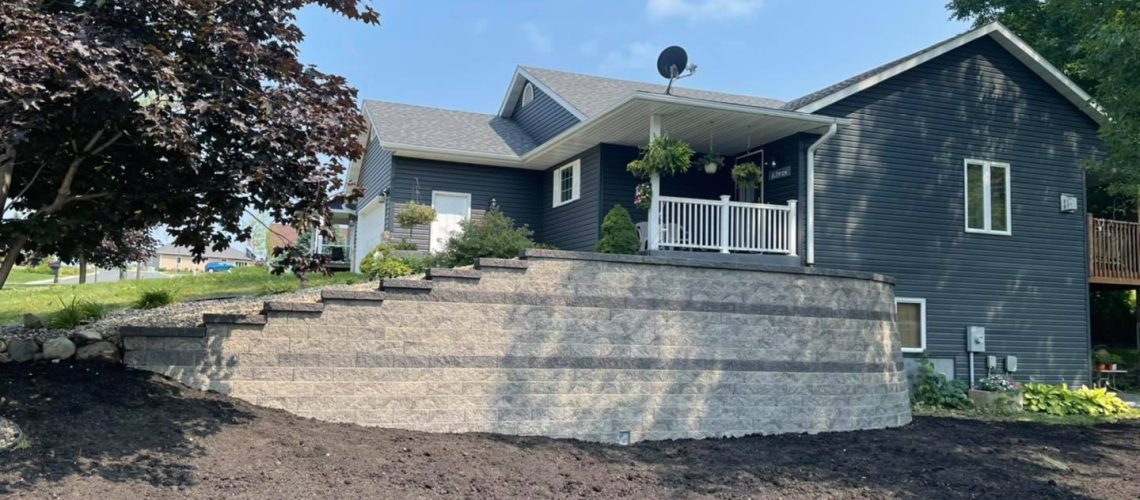

Retaining walls serve a critical function on countless properties throughout Southern Minnesota, holding back soil on sloped terrain and creating usable outdoor spaces. However, not all retaining walls are created equal. When a wall exceeds certain heights or retains significant amounts of soil, it crosses into engineered retaining wall territory, requiring professional design, proper permitting, and specialized construction techniques.
What Makes a Retaining Wall Engineered
An engineered retaining wall is one that has been specifically designed by a licensed professional engineer to safely retain soil under specific site conditions. In Southern Minnesota, most municipalities require engineering when walls exceed 4 feet in height, though this threshold varies by jurisdiction. The engineering process involves soil analysis, load calculations, drainage design, and detailed construction specifications. Unlike shorter decorative walls that can be built following manufacturer guidelines, engineered walls must account for soil pressure, water saturation, freeze-thaw cycles, and other forces that could cause failure. The engineer’s stamp on the plans provides legal assurance that the wall has been designed to perform safely under local conditions.
Why Southern Minnesota Conditions Demand Careful Design
Southern Minnesota’s climate presents unique challenges for retaining wall construction. The region experiences dramatic temperature swings, with bitter cold winters causing deep ground frost and hot summers that can stress materials differently. Freeze-thaw cycles, where water in the soil repeatedly freezes and expands then thaws and contracts, create tremendous pressure behind retaining walls. Heavy spring rains and rapid snowmelt add hydrostatic pressure that can overwhelm poorly designed drainage systems. Clay-heavy soils common throughout the region expand when wet and contract when dry, creating additional movement and pressure. These conditions mean that retaining walls in Southern Minnesota must be built to higher standards than similar walls in milder climates.
The Role of Proper Drainage
Behind every successful engineered retaining wall lies a comprehensive drainage system, and this becomes even more critical in Southern Minnesota’s wet spring seasons. Engineered walls typically incorporate multiple drainage elements working together. Gravel backfill behind the wall allows water to filter downward rather than building up pressure. Perforated drainage pipes at the base of the wall collect and channel water away to proper outlets. Some designs include drainage fabric to prevent soil from migrating into the gravel while allowing water to pass through. Without proper drainage, even the strongest wall will eventually fail as water pressure builds up during freeze-thaw cycles or heavy rain events. The engineering process specifically designs these drainage systems based on soil permeability tests and anticipated water volumes.
Materials & Construction Methods
Engineered retaining walls in Southern Minnesota typically use one of several proven systems. Modular concrete block systems with mechanical connections between courses provide strength and flexibility, allowing minor movement without failure. These systems use blocks specifically designed for engineering purposes, with features like interlocking pins, geogrid reinforcement layers, and engineered setback angles. Natural boulder walls, when properly engineered, provide excellent performance in our climate and blend beautifully with the landscape. Poured concrete walls with proper reinforcement offer maximum strength for extreme height or load situations. The choice of material depends on site conditions, height requirements, aesthetic preferences, and budget. All engineered systems share common requirements including proper base preparation, specified backfill materials, and integrated drainage.
When You Need Engineering
Most homeowners wonder exactly when engineering becomes necessary for their project. Beyond the height thresholds set by local codes, other factors can trigger engineering requirements. Walls supporting structures like patios, driveways, or buildings almost always require engineering regardless of height. Slopes above walls create additional load requiring engineering analysis. Poor soil conditions, high water tables, or proximity to property lines may also necessitate engineered designs. Even if local code doesn’t strictly require engineering for your wall height, many contractors and homeowners choose to engineer taller walls anyway for the peace of mind that comes with professional design. Insurance and liability concerns also make engineering worthwhile for significant projects.
The Cost Reality
Engineered retaining walls cost more than simple decorative walls, and homeowners should understand these costs upfront. Engineering fees typically range from several hundred to several thousand dollars depending on project complexity. The construction itself requires more extensive base preparation, specific materials, proper compaction equipment, and skilled installation. However, these additional costs represent insurance against wall failure, which can be catastrophically expensive to repair. A failed retaining wall doesn’t just mean rebuilding the wall itself but also dealing with soil erosion, damaged landscaping, potentially compromised structures, and liability issues if the failure affects neighboring properties. When viewed as a long-term investment in your property’s functionality and value, proper engineering proves cost-effective.
Permits & Inspections
Engineered retaining walls in Southern Minnesota require building permits from local authorities. The permit process typically involves submitting engineered plans for review, paying permit fees, and scheduling inspections at various construction stages. Inspectors verify proper base preparation, correct installation of drainage systems, proper backfill placement and compaction, and adherence to engineered specifications. While permits add time and cost to projects, they provide important safeguards. The review process catches design issues before construction begins, and inspections ensure the wall is built according to plan. Many homeowners find that having permitted, inspected work also helps with property value and provides documentation for future buyers.
Choose Peter’s Patio & Landscape to Design & Build Your Large Retaining Wall
If you’re looking for a top-rated contractor to construct an engineered wall for your property, reach out to the team at Peters’ Patio & Landscape today to schedule a consultation for your next project. Based in Kenyon and serving clients in Rochester, Owatonna, Blooming Prairie, Faribault, Lakeville, Prior Lake, Rosemount and more.